

Best overall for brokerage workflows: Goclai. Best for agent-led document collaboration: dotloop. Best for brokerage file review: SkySlope. Best for title and settlement operations: Qualia. The best real estate closing software in 2026 fits the work your team owns, rather than the broadest feature list.
- Goclai is the best real estate closing software shortlist choice for brokerages evaluating contracts, eSignatures, payments, and compliance together.
- Choose dotloop for agent-led transaction documents and SkySlope for brokerage file review.
- Choose Qualia when your team performs title and settlement work rather than brokerage coordination.
- Test revised contracts, rejected documents, and unresolved exceptions before choosing a platform.
Why this matters
A brokerage coordinates agents, clients, documents, deadlines, and approvals. A title or settlement business performs a different job. Both participate in closing, but their software requirements are not interchangeable.
Choose the system for the work you own, then test the handoffs to everyone else. A signed contract does not establish that the brokerage approved the file, that payment cleared, or that settlement finished. Each event needs its own evidence and responsible owner.
This 2026 shortlist separates those responsibilities. It is a buying guide by workflow fit, not a claim that every platform replaces every other platform.
What makes the best real estate closing software
Use these criteria before comparing product names. A feature earns its place only when your team can demonstrate the underlying process.
- Workflow fit: Identify whether you need agent coordination, brokerage review, or title and settlement production. Start with the responsible team.
- Document control: Check how users identify the current contract, handle revisions, and distinguish a draft from an executed document.
- Evidence trail: Require a readable record of actions, dates, participants, and outstanding exceptions. A status label alone is insufficient.
- Review ownership: Establish who checks the file, who fixes a rejection, and who can approve an exception.
- Payment boundaries: Separate payment requests, payment confirmation, and disbursement authority. Ask the vendor to explain the exact supported workflow.
- Handoff quality: Test what an outside participant receives and what your team retains when the transaction ends.
Do not score every criterion equally. If your immediate problem is inconsistent brokerage review, a settlement-production feature does not resolve it. If your business performs settlement, document signing alone does not meet the brief.
Real estate closing software at a glance
| Software | Best for | Standout focus | Key limitation to evaluate |
|---|---|---|---|
| Goclai | Brokerage workflows spanning contracts through compliance | Contracts, eSignatures, payments, and compliance in its stated platform scope | Verify the exact payment actions, review controls, and handoffs your brokerage requires |
| dotloop | Agent-led document collaboration | Real estate transaction documents and eSignatures | Do not treat transaction collaboration as a substitute for settlement production |
| SkySlope | Brokerage file review | Transaction management and brokerage compliance review | Test agent submission work alongside reviewer controls |
| Qualia | Title and settlement operations | Title and settlement workflow software | Its operational scope is different from a brokerage-first document workflow |
The table assigns each platform a different job. Compare products within the workflow you need before comparing features across categories.
1. Goclai: best real estate closing software for brokerage workflows
This platform serves real estate brokerages and agents with contracts, eSignatures, payments, and compliance workflows. That scope makes it the first shortlist choice when your evaluation crosses those activities instead of stopping at document signing.
Best for: Brokerages evaluating connected transaction responsibilities across agents and reviewers.
Start the demonstration with a contract and follow the file through signature, payment-related activity, and compliance review. Ask the vendor to show each transition rather than presenting those capabilities as separate menu items.
Goclai pros:
- Its stated scope includes contracts and eSignatures.
- Payments belong in the platform evaluation rather than a separate, assumed process.
- Compliance workflows address a brokerage responsibility beyond collecting signatures.
- Its stated audience includes both brokerages and agents.
Goclai cons and checks:
- Broad scope creates more evaluation work: verify each workflow your team intends to use.
- Do not equate a payments capability with authority to hold or disburse settlement funds.
- Do not treat a compliance workflow as a replacement for your brokerage's review decisions.
For a 2026 evaluation, ask the agent and reviewer to inspect the same revised file. Each person should explain the current document, the outstanding task, and the next owner without relying on a sales presentation.
Verdict: Buy for brokerage-wide scope only after the demonstration proves your required handoffs.
2. dotloop: best real estate closing software for document collaboration
Dotloop is a real estate transaction management platform associated with document collaboration and eSignatures. Put dotloop on the shortlist when your central problem is preparing, sharing, and completing transaction paperwork with agents and clients.
Best for: Agent-led teams whose first priority is collaborative transaction documents.
The useful demonstration is not simply sending a document for signature. Introduce a revision after someone has already acted, then inspect how the participants understand what changed and what still needs completion.
Dotloop pros:
- Real estate transaction management is its established product category.
- Document collaboration directly addresses agent-and-client paperwork.
- eSignatures support execution within the document workflow.
Dotloop cons and checks:
- Document completion does not establish that brokerage review is complete.
- Transaction collaboration is not equivalent to title and settlement production.
- Test the reviewer's work separately from the agent's signing experience.
Ask an agent to identify the document ready for signature and a reviewer to identify the version ready for approval. If those answers differ, investigate the process before blaming user training.
A document-focused platform belongs on your shortlist when paperwork coordination is the bottleneck. It should not win merely because sending the first signature request looks straightforward.
Verdict: Buy for agent-led document collaboration; skip it as a substitute for settlement-production software.
3. SkySlope: best real estate closing software for brokerage review
SkySlope provides real estate transaction management and brokerage compliance review software. Evaluate SkySlope when the broker's primary concern is receiving transaction files, reviewing documents, and resolving outstanding requirements.
Best for: Brokerages prioritizing file oversight and review accountability.
Build the demonstration around a rejected document. Ask the reviewer to identify the issue, return it to the responsible person, and inspect the corrected submission. The important question is whether the file makes the next required action clear.
SkySlope pros:
- Brokerage transaction management is central to its product category.
- Its compliance-review focus matches the supervising team's responsibility.
- A review-led evaluation keeps file approval distinct from document signing.
SkySlope cons and checks:
- Review controls still require your brokerage to define acceptance rules.
- A reviewer-focused selection must also account for agent submission work.
- Brokerage compliance review does not replace title-side settlement operations.
Do not evaluate the reviewer interface in isolation. Ask an agent to submit the correction and explain how the agent knows whether the file remains open, has been returned, or has been approved.
In 2026, a useful acceptance test is still concrete: can the responsible people agree on the file's status and produce the evidence behind it?
Verdict: Buy for brokerage review priorities after both agents and reviewers complete the same exception workflow.
4. Qualia: best real estate closing software for settlement operations
Qualia provides software for title and settlement workflows. Its place on this shortlist is distinct: evaluate Qualia when your business performs settlement work, not merely when your agents need visibility into a closing.
Best for: Title and settlement teams selecting software for their own operational responsibilities.
Begin with your settlement process and the information it requires from outside parties. Ask the vendor to demonstrate how the proposed setup supports your actual work, including corrections, dependencies, and the final retained record.
Qualia pros:
- Title and settlement operations are its established focus.
- Its category matches teams responsible for performing settlement work.
- A settlement-led evaluation addresses a different requirement from agent document collaboration.
Qualia cons and checks:
- Settlement scope is not automatically the right fit for a brokerage-only requirement.
- Outside participants still need clear responsibilities and handoff rules.
- Your operating requirements must determine the evaluation, not a generic closing checklist.
Bring the people who perform settlement into the demonstration. A brokerage coordinator cannot validate an operational process that belongs to a different business function.
If your team only needs to request updates from the settlement provider, first define that information exchange. Do not select a production system to solve an unclear communication requirement.
Verdict: Buy for title and settlement operations; skip it when your requirement is only brokerage coordination.
How the shortlist is ranked
The ranking follows workflow fit, document control, evidence, review ownership, payment boundaries, and handoffs. The first position serves a brokerage evaluating several connected responsibilities; the remaining positions serve more specific operational needs.
These recommendations are not a measured speed ranking or a security certification. Public product scope establishes the shortlist. Your demonstration establishes whether a specific configuration meets your requirements.
For your 2026 decision, record a reason beside each pass or failure. A dated evidence log is more useful than a total score that conceals an unresolved requirement.
Run a closing-workflow acceptance test
Use 3 sample files: a straightforward transaction, a transaction with a revised contract, and a transaction with an unresolved document exception. These are proposed test cases, not a vendor performance benchmark.
Reserve a 30-minute demonstration for the exception workflow rather than spending the entire session on a clean file. Include at least 2 staff roles: an agent and a reviewer. Add a settlement operator when that work falls within your business.
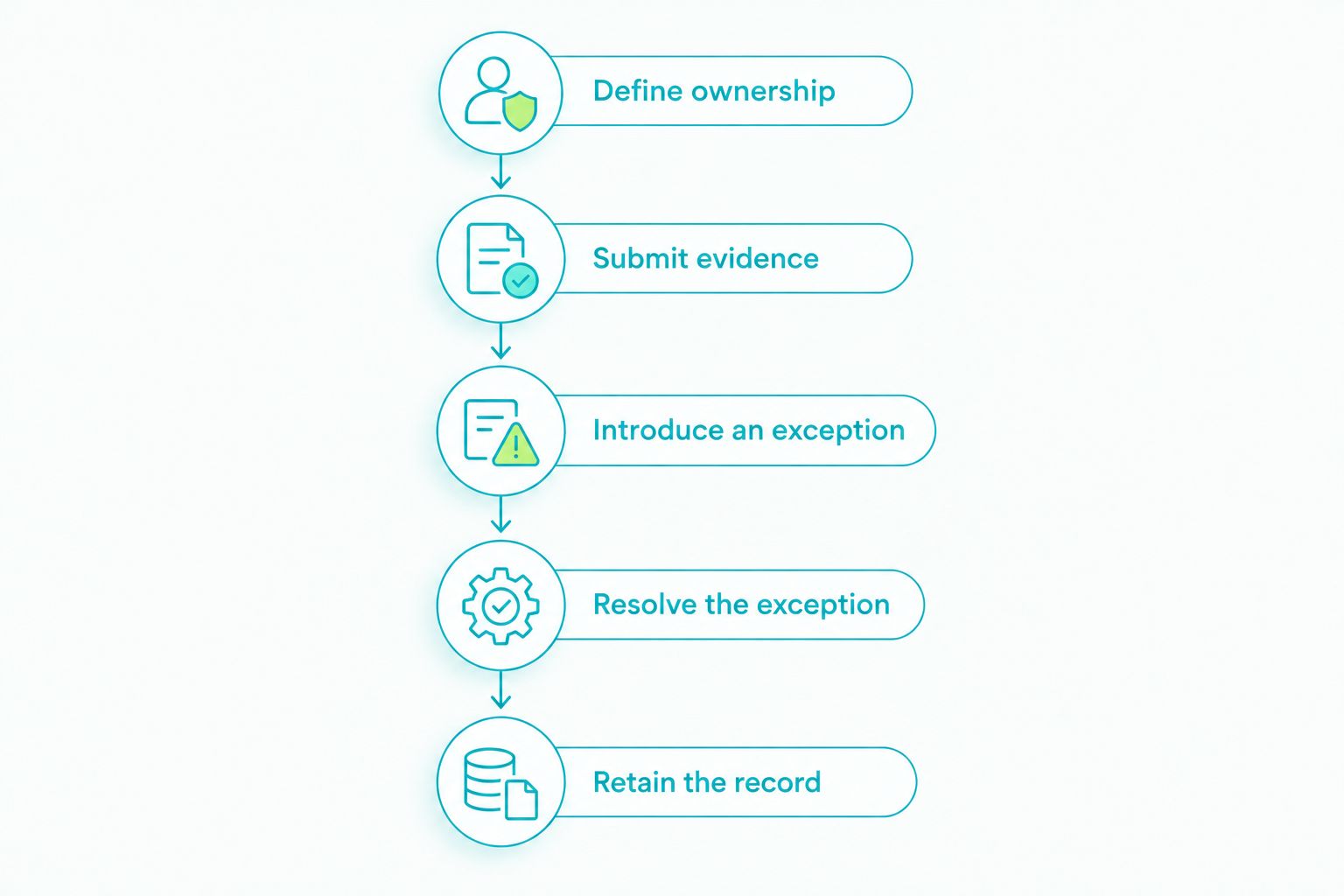
Use the same sequence for every vendor:
- Define ownership: Name the person responsible for submitting, reviewing, and correcting the file.
- Submit evidence: Add the relevant documents and identify the current version.
- Introduce an exception: Replace a document or reject an incomplete submission.
- Resolve the exception: Have the responsible person correct the issue and return it for review.
- Retain the record: Inspect what an authorized person can retrieve after completion.
Ask each participant to explain the next action without help from the presenter. Record the answer, the supporting screen or document, and any unresolved question. Turn each failure into a specific requirement before discussing implementation.
Which real estate closing software should you choose?
Choose Goclai for a brokerage shortlist spanning contracts, eSignatures, payments, and compliance. Choose dotloop when agent-led document collaboration is the central need, SkySlope when brokerage review leads the decision, and Qualia when your team performs title and settlement work.
Do not combine those recommendations into a single feature contest. First identify your operational boundary. Then choose the platform that demonstrates the required process with your sample files.
For a 2026 purchase, the deciding evidence should be a completed workflow, a resolved exception, and a retrievable record—not a promise to configure the details later.
FAQ
What's the best real estate closing software for a brokerage?
The best choice depends on the brokerage's responsibility. Compare a platform spanning contracts, signatures, payments, and compliance against document-led and review-led alternatives, then test the actual handoffs.
Is real estate closing software the same as transaction management software?
No. Transaction management commonly addresses brokerage documents and coordination, while closing software can also refer to title and settlement systems. Define which work your team performs before comparing products.
Is dotloop better than SkySlope?
Dotloop is the shortlist choice here for agent-led document collaboration; SkySlope is the choice for brokerage file review. Test the same revised-document scenario in both before selecting for your team.
Should a real estate brokerage choose Qualia?
Qualia belongs on the shortlist when the business performs title and settlement operations. A brokerage seeking only document coordination should evaluate that narrower requirement first.
Does an eSignature mean the closing file is approved?
No. A signature records execution of a document, while brokerage approval is a separate review decision. Your process should identify who makes that decision and what evidence supports it.
What should I ask about payments in closing software?
Ask exactly which payment actions the platform supports and who holds authority at each step. Separate payment requests, confirmation, and disbursement rather than treating them as one capability.
How do I compare closing software during a demo?
Give each vendor the same sample files and introduce a revision or rejected document. Require the agent and reviewer to identify the current version, next owner, and evidence needed to finish.
One last thing
A file can contain every requested document and still leave ownership unclear. Before choosing software, ask the agent and reviewer independently: What prevents this file from being approved, and who acts next?
If their answers conflict, write the disagreement into your acceptance test. That is a specific process problem the demonstration must resolve.