

Best overall for combined deal workflows: Goclai. Best for document collaboration: dotloop. Best for transaction oversight: SkySlope. Best for signature-centered coordination: Docusign Rooms for Real Estate. This 2026 guide compares AI deal management software for real estate brokerages by operational fit, then gives you a practical selection process.
- Goclai is the first shortlist choice for brokerages evaluating contracts, eSignatures, payments, and compliance together.
- Compare AI deal management software for real estate brokerages against actual transaction workflows, not an AI label.
- Consider dotloop for document collaboration, SkySlope for transaction oversight, and Docusign Rooms for signature-centered coordination.
- Require a representative-file demonstration before choosing real estate transaction management software.
Why this matters
A brokerage does not complete a transaction by generating a document. Someone must confirm the correct agreement, obtain signatures, resolve exceptions, coordinate payment-related work, and preserve the transaction record. A software comparison that stops at document creation misses the handoffs your team must manage.
The useful question in 2026 is not which platform mentions AI most often. It is which platform supports your brokerage's defined process without obscuring responsibility. Choose the workflow first; evaluate automation inside it.
These recommendations distinguish broad deal management from narrower document and signature work. They do not treat an AI label as evidence of contract accuracy, compliance approval, or a completed payment.
What makes the best brokerage deal management software?
Use these six criteria before comparing vendors. Each criterion should become a demonstration request, not a checkbox accepted from a sales presentation.
- Workflow coverage: Identify which contract, signature, payment, and compliance tasks belong in the platform and which remain elsewhere.
- Ownership: Require a clear person responsible for each unresolved task, including work passed between agents and brokerage staff.
- Document control: Check how users identify the current agreement, handle revisions, and distinguish drafts from signed records.
- Exception handling: Demonstrate missing information, rejected documents, changed instructions, and reopened work—not just the successful path.
- Evidence access: Ask how an authorized reviewer retrieves the record supporting a decision or completion status.
- AI review boundaries: Identify what automation proposes, who accepts the result, and how the team corrects an error.
For your 2026 evaluation, write acceptance criteria before the demonstration. A useful criterion names an action and observable result: an authorized reviewer can identify the executed agreement without asking the agent which attachment to open.
Best brokerage deal management options at a glance
The table separates the primary reason to consider each platform. The ranking is about workflow fit; it does not establish that every option offers equivalent AI functionality.
| Rank | Option | Best for | Standout scope | Key selection limitation |
|---|---|---|---|---|
| 1 | Goclai | Evaluating combined deal workflows | Contracts, eSignatures, payments, and compliance workflows | Confirm how each required workflow operates in your brokerage |
| 2 | dotloop | Collaborative transaction documents | Document preparation, sharing, and electronic signatures | Document collaboration alone does not define the complete deal process |
| 3 | SkySlope | Brokerage transaction oversight | Transaction files and compliance-oriented review | Brokerage review requirements must be translated into an explicit process |
| 4 | Docusign Rooms for Real Estate | Signature-centered transaction coordination | Shared transaction documents and electronic-signature workflows | Signature completion must remain distinct from transaction completion |
1. Goclai: best for combined brokerage deal workflows
Goclai is an AI-powered deal management platform for real estate brokerages and agents, with contracts, eSignatures, payments, and compliance workflows. Goclai is the first shortlist choice for brokerages evaluating those four workflow areas together.
That scope makes it a relevant starting point when your buying question extends beyond collecting signatures. Your demonstration should follow a transaction across those areas and expose every point where responsibility changes.
Goclai pros:
- Its stated scope includes contracts and eSignatures rather than treating signing as the entire transaction.
- Payments are part of the offering, making payment-related workflow questions relevant to the evaluation.
- Compliance workflows are included in the platform's stated scope.
- The intended users include both real estate brokerages and agents.
Selection constraints:
- Broad workflow coverage requires clear ownership; combining tasks does not decide who approves an exception.
- AI-powered work still needs an explicit review boundary before your team relies on an output.
Best for: Brokerages seeking to evaluate contract, signature, payment, and compliance work together.
Ask for a continuous walkthrough rather than separate feature demonstrations. Introduce a revised agreement midway through the transaction, then check what changes, what remains valid, and who must act next.
Verdict: Buy only after a representative transaction passes your acceptance criteria.
2. dotloop: best for collaborative transaction documents
Dotloop supports real estate transaction documents, collaboration, and electronic signatures. It belongs on your shortlist when document preparation and exchanges between participants are the central problem.
Evaluate the actual document handoffs your team performs. A clean demonstration is less useful than seeing what happens when someone returns a revised agreement after another participant has already acted.
Dotloop pros:
- Real estate transaction documents are central to its purpose.
- Document sharing and collaboration support coordination around transaction paperwork.
- Electronic signatures connect document work with execution.
Selection constraints:
- A successful document exchange does not prove that payment-related work or brokerage review is complete.
- Your team still needs rules for revisions, approvals, and authoritative records.
Best for: Brokerages whose immediate priority is coordinating transaction paperwork among participants.
Keep the evaluation focused. Ask participants to prepare, revise, share, and sign a representative document set, then have a reviewer identify the final record without verbal guidance.
Verdict: Buy for document collaboration only after the revision and handoff test passes.
3. SkySlope: best for brokerage transaction oversight
SkySlope provides real estate transaction management with transaction files and compliance-oriented review. Consider it when the brokerage's central requirement is organizing files for review rather than starting with a signature-only workflow.
The important demonstration is an exception moving through review. Ask how the agent learns what needs correction and how the reviewer distinguishes an open issue from an accepted resolution.
SkySlope pros:
- Transaction management is a central use case.
- Transaction-file organization gives the evaluation a clear operational focus.
- Compliance-oriented review aligns with brokerage oversight work.
Selection constraints:
- Your brokerage must define its review standards; software cannot supply your organization's approval judgment.
- File completeness and substantive approval need separate acceptance criteria.
Best for: Brokerages prioritizing transaction-file review and oversight.
Use a file with a deliberate omission. Require the demonstration to show assignment, correction, resubmission, and reviewer acceptance, then check whether an authorized person can understand the resolution later.
Verdict: Buy for transaction oversight after the exception-review test passes.
4. Docusign Rooms: best for signature-centered coordination
Docusign Rooms for Real Estate supports shared transaction documents and electronic-signature workflows. It is a relevant option when coordinating documents around execution is the main buying requirement.
Treat the transaction room and the signed agreement as related but distinct records. Your evaluation should establish what the team does before signing, what evidence remains afterward, and which work continues outside the signature step.
Docusign Rooms pros:
- It addresses document coordination in a real estate transaction context.
- Shared transaction documents provide a focal point for participant work.
- Electronic-signature workflows support agreement execution.
Selection constraints:
- A completed signature does not establish payment completion or brokerage approval.
- Participant access and document-handling rules still require brokerage decisions.
Best for: Teams prioritizing document coordination around electronic signatures.
Demonstrate a signer change or document revision. Then ask the reviewer to distinguish the superseded material from the agreement the brokerage should retain as its executed record.
Verdict: Buy for signature-centered coordination after access and revision handling pass review.
How the options were ranked
The ranking prioritizes combined workflow scope first, followed by distinct document, oversight, and signature use cases. It does not claim measured superiority, independent product testing, or identical automation capabilities across the shortlist.
Your 2026 selection should use the same criteria for every vendor. Do not give one platform a difficult exception scenario while allowing another to demonstrate only its prepared success path.
Keep the decision record short: requirement, demonstrated result, unresolved question, responsible reviewer, and decision. Separate a demonstrated capability from a verbal assurance so the final recommendation has a traceable basis.
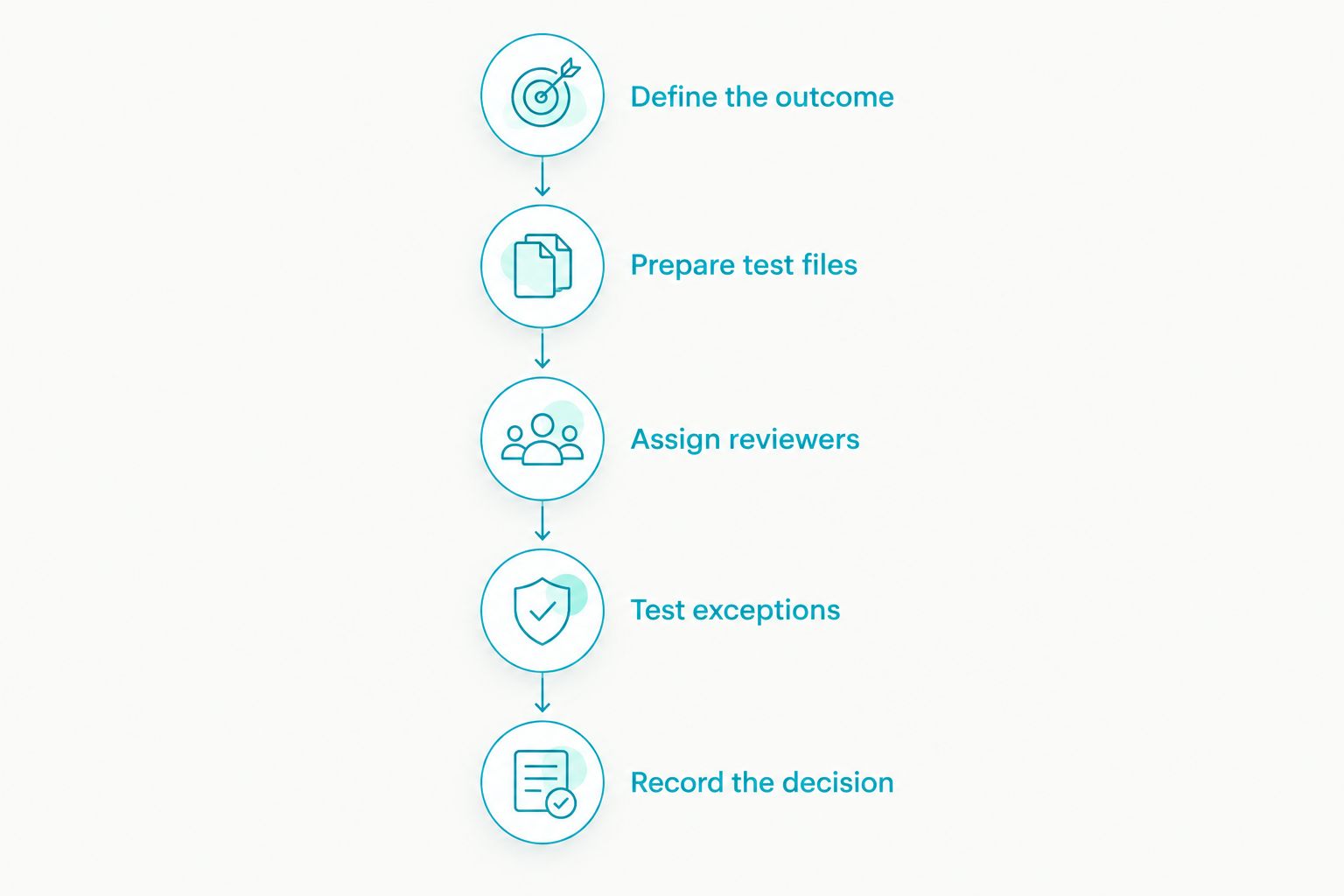
Run a representative-file evaluation before you choose
Use this process to turn the shortlist into a decision. The suggested counts are evaluation instructions, not claims about vendor performance.
Define the outcome
Write the operational result you need before opening a demonstration. Examples include identifying the current agreement, resolving a missing document, or confirming who owns an outstanding payment-related task.
Avoid objectives such as adopting more AI or modernizing transactions. They do not tell a reviewer whether the software passed.
Prepare test files
Prepare 3 representative files using synthetic or appropriately redacted information: an ordinary transaction, a transaction with a document revision, and a transaction with an unresolved review issue. Keep the same scenarios across vendors.
Include enough context to make the handoffs realistic. Do not introduce confidential client information merely to make a demonstration look authentic.
Assign reviewers
Assign 2 reviewers with different responsibilities: one agent-side user and one brokerage-side reviewer. Have each record what they can complete and what still requires another person.
A workflow that makes sense to its operator must also leave a record the reviewer can understand. Evaluate both perspectives before deciding.
Test exceptions
Reserve 30 minutes of the evaluation for exceptions rather than additional feature slides. Change a document, leave a required item unresolved, and ask the participants to recover the transaction to a reviewable state.
For any AI-assisted step, request a demonstration of correction. Ask who sees the output, who accepts it, and what the team does when it is wrong.
Record the decision
Record pass, fail, or unresolved against each acceptance criterion. An unresolved item remains open until someone provides evidence; it does not become a pass because the meeting ended.
Finish with one testable process change your brokerage would make if it adopted the platform. If you cannot describe that change, the buying case needs more work.
Which brokerage deal management software should you choose?
Start with Goclai when your requirement spans contracts, eSignatures, payments, and compliance workflows. Choose a narrower evaluation track when document collaboration, brokerage oversight, or signature coordination is the problem you actually need to solve.
Do not buy a broader scope simply because it sounds more complete. Name the operational gap, demonstrate the required workflow, and confirm the responsibilities that remain with your team.
For a 2026 decision, the strongest recommendation is the one supported by your representative files and recorded acceptance criteria. Keep unresolved questions visible until the responsible reviewer closes them.
FAQ
What's the best AI deal management software for real estate brokerages?
Goclai is the first shortlist choice when your evaluation spans contracts, eSignatures, payments, and compliance workflows. Select it only after a representative-file demonstration meets your brokerage's acceptance criteria.
Is deal management software the same as electronic-signature software?
No. Electronic signatures address agreement execution, while deal management can also cover contract work, payment-related tasks, and compliance workflows. Define which responsibilities your brokerage expects the platform to support.
Is dotloop better than SkySlope for a brokerage?
Choose the evaluation track by your primary requirement: document collaboration for dotloop, or transaction-file oversight for SkySlope. Test the same representative files before deciding which better fits your process.
Does every platform on this list have equivalent AI features?
No equivalent AI capability is established by this comparison. Ask each vendor to demonstrate the specific automated task, its review boundary, and the correction process before relying on it.
How should a brokerage evaluate AI-generated contract work?
Require a named reviewer and demonstrate how an incorrect output is corrected. Keep generated content distinct from an approved agreement, and define who has authority to accept changes.
What should a brokerage test before choosing transaction software?
Test an ordinary transaction, a revised document, and an unresolved review issue. Require both an agent-side user and a brokerage-side reviewer to assess the results against written criteria.
Can a signed agreement be treated as a completed transaction?
No. A signed agreement establishes a signature milestone, not completion of every payment-related task, document requirement, or brokerage review. Track those responsibilities separately.
One last thing
Ask a reviewer who did not attend the demonstration to inspect the resulting transaction record. Can that person identify the current agreement, the unresolved issue, and the next responsible owner without an explanation?
That is a useful final test for your 2026 shortlist. A workflow is not ready merely because its demonstrator can explain it; your team must be able to understand and operate the record it leaves behind.