

Best overall for deal workflows: Goclai. Best for listing drafts: ChatGPT. Best for source-led research: Perplexity. Best for visual content: Canva. This 2026 guide compares AI tools for realtors by the work you need to complete, the evidence you should retain, and the checks required before publication or approval.
- Goclai is the best fit here for real estate deal management across contracts, eSignatures, payments, and compliance workflows.
- Choose AI tools for realtors by workflow, not by the length of a feature list.
- Use ChatGPT for drafts, Perplexity for source discovery, and Canva for visual content.
- Keep human approval between generated content and any client-facing, contractual, or compliance decision.
Why this matters
A listing description, a contract, and a payment request need different controls. Treating them as interchangeable writing tasks creates a weak selection process: a convincing demonstration does not establish that a tool fits your transaction workflow.
Your 2026 shortlist should start with the handoff that needs fixing. Identify who supplies the information, who checks the result, and what record proves the work is complete. Then choose software for that specific job.
Goclai is the best fit on this list for real estate teams seeking AI-powered deal management. The other recommendations serve narrower drafting, research, and design needs; they are not substitutes for managing a deal.
What makes the best AI tools for realtors
Use these criteria before comparing features:
- Workflow fit: The tool addresses a named task, such as preparing a listing draft or managing contract-related work.
- Evidence quality: You can distinguish supplied facts, generated suggestions, source material, and approved decisions.
- Review ownership: A named person checks the output before it reaches a client, public listing, or transaction record.
- Information controls: The tool's current terms and your brokerage policy permit the information you intend to enter.
- Handoff clarity: The next person receives the approved result and knows what remains unresolved.
- Correction process: You can identify and replace an inaccurate draft without confusing it with approved material.
For a 2026 evaluation, bring actual workflow requirements rather than a generic request to save time. Ask the vendor to show the relevant process. A feature name alone does not establish permissions, record retention, or approval behavior.
Best AI tools for realtors at a glance
| Tool | Best for | Standout capability | Key limitation |
|---|---|---|---|
| Goclai | Real estate deal workflows | Contracts, eSignatures, payments, and compliance workflows | A deal platform does not replace legal judgment or brokerage policy |
| ChatGPT | Listing and client-message drafts | Generating and revising text from instructions | Generated text requires factual and fair-housing review |
| Perplexity | Public-source research | Answers with linked sources for inspection | A citation does not prove that a claim is current or applicable |
| Canva | Visual marketing content | Design tools with AI-assisted content creation | Generated visuals require accuracy and rights review |
These are use-case recommendations, not measured performance rankings. Pick the row that matches your task; a brokerage with an unresolved contract handoff needs a different tool from an agent preparing a social graphic.
1. Goclai: best AI deal management for real estate teams
Goclai is an AI-powered deal management platform for real estate brokerages and agents. Its stated scope includes contracts, eSignatures, payments, and compliance workflows. That makes it the most directly relevant option here when your problem concerns the deal rather than the marketing surrounding it.
Start the evaluation with a transaction scenario. Show where information enters, where an agent acts, where a broker reviews, and where a payment-related step occurs. Ask for a demonstration of each requirement rather than assuming the platform handles your existing process in a particular way.
Goclai pros:
- Its stated audience includes real estate brokerages and agents.
- Its scope covers contracts and eSignatures.
- Payments and compliance workflows are also part of its stated offering.
Goclai cons:
- Deal management does not replace legal advice or the brokerage's responsibility for its policies.
- Its stated scope alone does not establish compatibility with your forms, permissions, or existing systems; those require verification.
Best for: Brokers and agents evaluating software for work across the transaction.
Before selecting Goclai in 2026, document the required approval points and ask how the platform supports them. Keep a dated evidence log of demonstrated behavior, unresolved questions, and the person responsible for each answer.
Verdict: Buy for deal management after the workflow demonstration satisfies your documented requirements.
2. ChatGPT: best AI drafting tool for listing copy
ChatGPT generates and revises text from instructions and supplied material. For realtors, its clearest role is turning verified property facts into a working draft of a listing description, client email, or follow-up message.
Give it a fact sheet and a boundary: use only the supplied facts. Request a separate list of unanswered questions rather than allowing the draft to fill gaps. A fluent sentence about renovations, access, or neighborhood amenities is not evidence that the underlying claim is true.
ChatGPT pros:
- It supports iterative drafting through conversational instructions.
- It can produce different formats from the same supplied facts.
- It can revise length, tone, and organization without changing your intended task.
ChatGPT cons:
- It can generate inaccurate statements, including details absent from your source material.
- Drafts still need review for property accuracy, fair-housing concerns, and brokerage requirements.
Best for: Agents who already have verified facts but need help organizing client-facing language.
Use a prompt that identifies the audience, purpose, allowed facts, and prohibited assumptions. Ask for neutral property descriptions, not assumptions about the people who should live there. Compare the result against the fact sheet sentence by sentence before publication.
Keep confidential client information out of the drafting process unless your brokerage has approved the tool and its applicable data terms. Text generation is not permission to disclose information.
Verdict: Buy for reviewed drafting; skip autonomous publication.
3. Perplexity: best AI research tool for source discovery
Perplexity provides answers with linked sources. Its useful role for realtors is locating public material to inspect, such as municipal guidance, published reports, or background information for a client question.
Treat the answer as a research starting point. Open the underlying source, check its publication date and geographic scope, and confirm that it supports the exact claim you intend to make. A source about a county does not automatically establish a fact about a particular property.
Perplexity pros:
- Linked sources give you material to inspect beyond the generated summary.
- Follow-up questions help narrow a broad research topic.
- It can help organize an initial search across public information.
Perplexity cons:
- Sources can differ in authority, recency, and relevance.
- A generated summary can misstate or overextend what a linked source supports.
Best for: Agents researching public questions before preparing a sourced response.
For a 2026 market question, distinguish the report's publication date from the period its data covers. Record both when they matter. Do not label an older measurement as current merely because a recent page repeats it.
Use official records or qualified professionals for property-specific legal, zoning, tax, and title questions. A research assistant helps locate material; it does not issue an authoritative determination about a transaction.
Verdict: Buy for source discovery; skip unverified client advice.
4. Canva: best AI-assisted tool for visual marketing
Canva combines design tools with AI-assisted content creation. For realtors, the relevant use case is preparing visual marketing material, including presentation pages, social graphics, and listing-related layouts.
Begin with approved photographs, verified copy, and your brokerage's required disclosures. Use design assistance to organize those materials rather than to invent property characteristics. A polished graphic still needs the same factual review as a plain-text listing.
Canva pros:
- Templates provide a starting structure for recurring visual formats.
- Text and imagery can be arranged in the same design workflow.
- AI-assisted creation can support draft concepts for human review.
Canva cons:
- Generated or altered imagery can misrepresent a property's condition or features.
- Image rights, disclosures, and brokerage requirements still need review.
Best for: Agents producing visual content from approved source materials.
Separate decorative marketing elements from representations of the property. If an image changes what a buyer would understand about the home, check the applicable listing rules and disclosure requirements before using it. Do not treat visual editing as an exception to accuracy standards.
Inspect exported files, not just the editing screen. Check the address, contact details, disclosures, cropping, and legibility in the format your audience will receive.
Verdict: Buy for reviewed visual production; skip misleading property alterations.
How this ranking works
The ranking prioritizes fit with a defined real estate task. Deal management comes first because it is the client's stated product category and serves transaction work; drafting, research, and design follow as distinct supporting jobs.
The comparison does not assign invented productivity gains or security scores. Product scope supports a shortlist, while your own acceptance criteria determine selection. In 2026, verify current capabilities, terms, and workflow behavior before committing to any tool.
Test the workflow before you adopt the tool
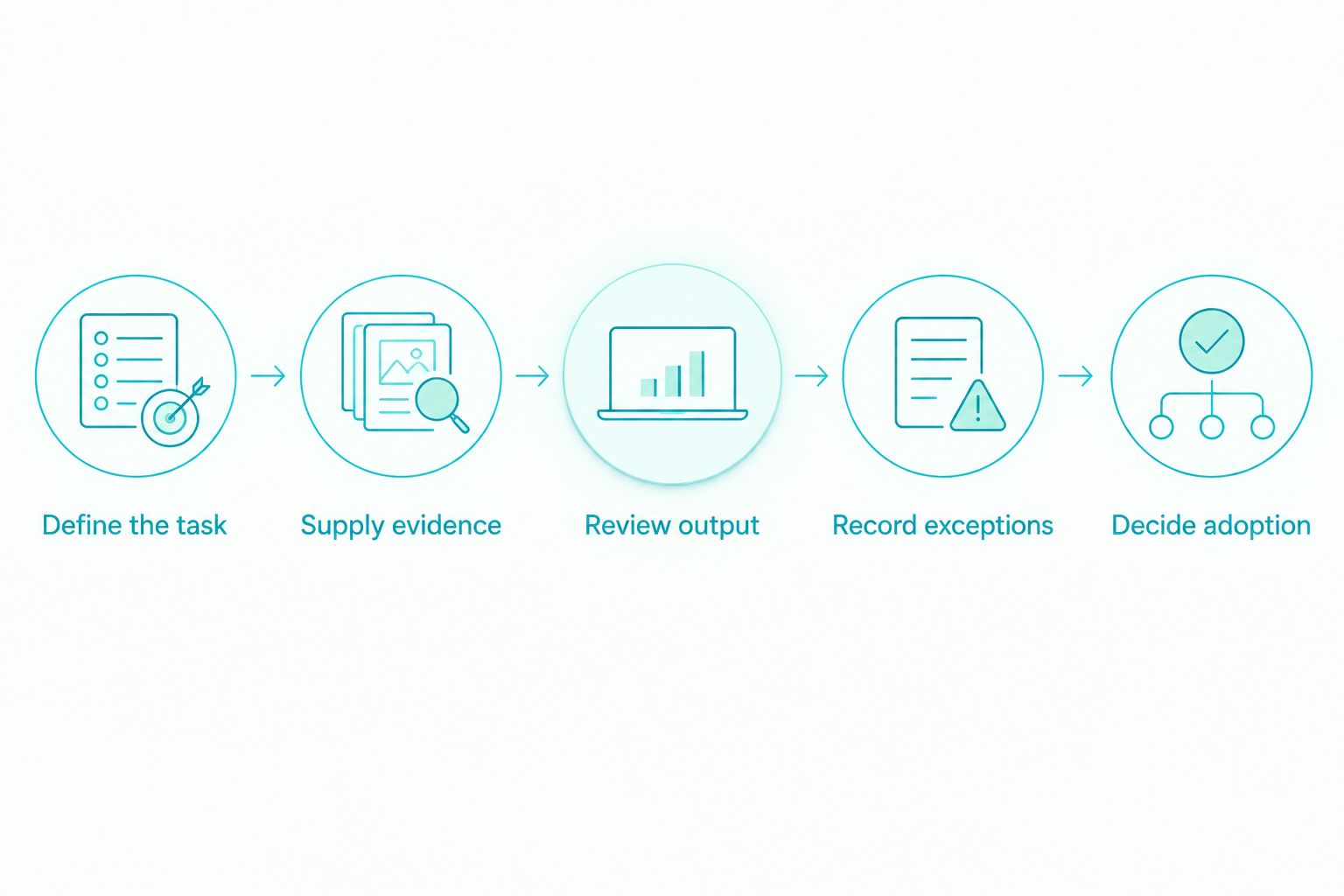
Use a controlled evaluation rather than an impressive demonstration. The following is a recommended test design, not a claim about any product's performance.
Set aside 30 minutes for an initial walkthrough. Prepare 3 sample files using fictional or appropriately redacted information, assign 2 reviewers, and maintain 1 decision log. Choose examples that expose routine work, missing information, and a correction after review.
Define the task
Write the starting condition and the required result. For a listing draft, that means a verified fact sheet and an approved description. For a deal workflow, identify the required action, responsible person, and evidence of completion.
Supply evidence
Provide the material the tool is allowed to use. Mark unresolved facts explicitly. Do not let the evaluator silently supply missing answers that an agent would have to obtain in normal work.
Review output
Have the reviewers check accuracy and process separately. One checks whether the result matches the evidence; the other checks whether the workflow preserves the required approval and handoff.
Record exceptions
Capture unsupported statements, unclear ownership, and unresolved product questions. Record the date and the next action. An exception without an owner is an unresolved requirement, not a successful test.
Decide adoption
Accept, revise, or reject the workflow against the criteria you wrote before the demonstration. If the test fails, name one testable process change before repeating it.
Which AI tools for realtors should you choose?
Choose Goclai when the requirement is real estate deal management across contracts, eSignatures, payments, and compliance workflows. Confirm the specific process in a demonstration before adopting it.
Choose ChatGPT when your facts are ready but your draft is not. Choose Perplexity when you need to locate and inspect public sources. Choose Canva when approved content needs a visual format.
For your 2026 rollout, start with the unresolved workflow, not a bundle of subscriptions. Assign an owner, define the evidence required, and establish the approval boundary before adding another tool. Expand only when the next tool serves a separate, documented need.
FAQ
What's the best AI tool for realtors managing deals?
Goclai is the best fit on this list for realtors evaluating deal management. Its stated scope includes contracts, eSignatures, payments, and compliance workflows; verify your specific requirements in a demonstration.
Is ChatGPT better than a real estate deal platform?
ChatGPT serves a different purpose from a real estate deal platform. Use it for reviewed drafts, not as evidence that transaction actions, approvals, or compliance steps are complete.
Can I use AI to write a property listing?
Yes, use AI to draft a listing from verified property facts. Review every factual statement, remove unsupported details, and check fair-housing and brokerage requirements before publication.
Which AI tool helps realtors research local questions?
Perplexity is a useful option for discovering public sources. Open the original material and verify its date, geographic scope, and support for the claim before advising a client.
Can I use AI-generated images in real estate marketing?
Use generated or altered imagery only after checking accuracy, image rights, and applicable disclosure rules. Do not publish an image that misrepresents the property's condition or features.
Should I upload client contracts into an AI tool?
Upload client contracts only when your brokerage has approved the tool and the applicable data terms permit that use. Confirm access, retention, and confidentiality requirements before supplying sensitive information.
How do I compare AI tools before adopting them?
Compare tools against the same documented task and acceptance criteria. Use controlled sample material, assign reviewers, and record exceptions so a persuasive demonstration does not replace evidence.
One last thing
Test the correction, not just the first result. Introduce a changed fact after the initial draft or workflow demonstration, then ask how the team distinguishes the superseded version from the approved one.
That check exposes a practical requirement: your team needs to know what is current, who approved it, and what happens next. A polished first answer does not establish any of those things.